خیام و شادی تلخ(بفارسی و انگلیسی): مجید نفیسی
خیام و شادی تلخ
مجید نفیسی

فصل سوم از کتاب «در جستجوی شادی: در نقد فرهنگ مرگپرستی و مردسالاری در ایران»، نشر باران، سوئد، ۱۳۷۰. مقدمه کتاب — فصل اول — فصل دوم
آنچه روح خیام را دائماً میخورد انديشه مرگ و حیات پس از آن است. او جوابهای رایج مذهبی معاد و تناسخ را به ریشخند میگیرد و خود برای رهایی از فکر غلبهناپذیری مرگ، رو به مستی و معشوق مینهد و به عشرت و خوشباشی پناه میآورد. در نتیجه، علیرغم انتقاد از معاد و عبادات و تکالیف ناشی از آن، خیام قادر نیست که نقطه مبداً مذهب یعنی تسلط سایه مرگ بر زندگی را رد نماید و به آئین ستایش زندگی نزديك شود. در فلسفه خوشباشی او فقط جای میخانه آسمانی مذهب با میخانه زمینی و آداب میگساری عوض شده است. به علاوه خیام، اگر چه از وجود بیعدالتی و جهل در اجتماع رنج میبرد و زبان به انتقاد از روحانیت میگشاید با این وجود مبشر گوشهنشيني و دوری از اجتماع است. پس بیجا نیست اگر عشرت خیامی را شادی تلخ بنامیم: شادخواری انسانی تنها که زندگی در دهان او مزه مرگ میدهد.
خیام علاوه بر شعر در نجوم و ریاضی نیز دست داشت. کار علمی به او كمك میکند که در مسائل فلسفی به دور از پیشداوریهای مذهبی بیندیشد. رباعی زیر در ضمن اینکه تائیر علم نجوم در تفکر فلسفی او را نشان میدهد، ما را به دل مشغولیهای اصلی او یعنی مسالة مرگ آشنا میسازد:
از جرم گِل سیاه تا اوج زحل
کردم همه مشکلات کلی را حل
بگشادم بندهای مشکل به حِیّل
هر بند گشاده شد به جز بند اجل*
مرگ نیرویی است که هیچ آدمی را از آن رهایی نیست:
بر چرخ فلك هیچ کسی چیر نشد
ور خوردن آدمی زمین سیر نشد
مغرور بدانی که نخوردست ترا
تعجیل مکن هم بخورد دیر نشد
اگر چه رابطه نیستی و هستی گسست ناپذیر است اما موضوع مرگ برای خیام به مراتب مهمتر و پر جاذبهتر از موضوع پیدایش زندگی است. جهان چه «محدث» باشد چه «قدیم» به هر حال مرگ دقالباب میکند:
جاوید نیم چو اندرین دهر مقیم
پس بی می و معشوق خطاییست عظیم
تا کی ز قدیم و محدث ای مرد سلیم
رفتیم چو ما جهان چه محدث چه قدیم
انسان پس از مرگ تبدیل به خاك میشود. پس هر مشت خاکی یادگاری از یک انسانِ درگذشته است.
گردون ز زمین هیچ گلی بر نارد
تا نشکند و باز به گل نسپارد
گر ابر چو آب خاك را بر دارد
تا حشر همه خون عزیزان بارد
آدمی نمیتواند در واقعیت از مرگ بگریزد. ولی راه آرزو بر او نبسته است و سه گریزگاه خیالی به او لبخند میزند: نخست، اگر انسان بتواند از چشمهی آب حیات بنوشد و چون خضر سبز بماند. اسکندر ذوالقرنین از این راه ناکام بازگشت و اسفندیار و آشیل که در آب مقدس غوطه خوردند هر يك ناخواسته نقطه ضعفی برای خود باقی گذاشتند که مرگ از طریق آن بر روئین تنی آنها فائق آمد. پس تنها خدایان یا نیمه خدایان جاودانه میشوند و انسان را بدان دسترسی نیست. دوم، در اصل تناسخ به عقیدة هندوان، انسان پس از مرگ بر اساس کارنامه اعمالش در دنیا بار دیگر به شکل موجودی جدید درمیآید و بدین صورت بر مرگ غلبه میکند. سوم، به زعم ادیان ابراهیمی، روح انسان پس از مرگ باید منتظر روز قیامت باقی بماند. در آن هنگام تمام مردگان از خاك برخواهند خاست. اگر در دنیا بد کردهاند به دوزخ و اگر نه، به فردوس راه خواهند یافت.
ای کاش که جای آرمیدن بودی
یا این ره دور را رسیدن بودی
کاش از پی صد هزار سال از دل خاك
چون سبزه امید بردمیدن بودی
علیرغم این که خیام هر سه شکل آرزوی غلبه بر مرگ را پوچ میشمارد ولی خود از فکر تناسخ هندی تأثیر برمیگیرد. اجزاء بدن فرد پس از مرگ در موجودات دیگر باقی میماند پس میان مردگان و زندگان وحدتی مادی وجود دارد:
هر سبزه که بر کنار جویی بودست
گویی که خط فرشته خویی بودست
پا بر سر سبزه تا بخواری ننهی
کان سبزه ز خاك لاله رویی بودست
خیام بین خود و دیگران از يك سو و گذشته، حال و آینده، از سوی دیگر، پیوندهای عمیق عاطفی احساس میکند. پیوندی که به همان اندازه که شادیآفرین است میتواند غمآفرین نیز باشد:
بر سنگ زدم دوش سبویی کاشی
سر مست بدم که کردم این اوباشی
با من به زبان حال میگفت سبو
من چون تو بدم تو نیز چون من باشی
وحدت جهان مادی، ناشی از همانندی عناصر متشکله آن است:
داننده چو ترکیب طبایع آراست
من هیچ ندانم ز چه کردش کم و کاست
ور نیک آمد چراش در هم بشکست
ور نیک نیآمد این صور عیب کراست
در رباعی زیر عناصر چهارگانه متشکله مادی را نام میبرد:
ما و می و معشوق در این کنج خراب
فارغ ز امید رفتن و بیم عذاب
جان و تن و جام و جامه در رهن شراب
آزاد ز باد و خاك و از آتش و آب
از میان عناصر اربعه، خاك برای انسانی که در محاصرة بیابانهای بزرگ زندگی میکند مهمتر مینماید. در همه کتابهای مقدس ادیان توحیدی خاورمیانه از جمله قرآن گفته میشود که خداوند انسان را از خاك مخصوص سفالگری آفرید و سپس در او روح دمید. خیام نیز از این افسانه تاثیر میگیرد با این تفاوت که در نزد او دستگاه آفرینش يا پیدایش شامل دو باب است: یکی کارگاه سفالسازی و دیگری دکان میفروشی. در اولي تن انسانها ساخته میشود و در محل دوم روح خدایی در بدنها ريخته میگردد. از خاك هر کوزهای که شکست کوزه دیگری ساخته میشود و این عمل تا ابد ادامه دارد:
در کارگه کوزهگری رفتم دوش
دیدم دو هزار کوزه گویا و خموش
ناگاه یکی کوزه برآورد خروش
کو کوزهگر و کوزهخر و کوزهفروش
اما استاد کارگاه کسی نیست مگر کوزهگر دهر:
جامیست که عقل آفرین میزندش
صد بوسه ز مهر بر جبین میزندش
وین کوزهگر دهر چنین جام لطیف
میسازد و باز بر زمین میزندش
گاهی کوزهگر دهر تبدیل به نقاش گلشن دهر میشود:
هر چند که روی و موی زیباست مرا
چون لاله رخ و چو سرو بالاست مرا
معلوم نشد که اندرین گلشن دهر
نقاش ازل بهر چه آراست مرا
همچنین گاهی به جای اصطلاح «دهر» از تعابیر چرخ گردون و فلک استفاده میشود که هم یادآور چرخ کوزهگری است و هم ناظر بر حرکت ستارگان و افلاك میباشد:
ای چرخ چه شد خسیس را چیز دهی
گرمابه وآسیاب و دهلیز دهی
آزاده به نان شب گروگان بدهد
باید که بر این چنین فلك تیز دهی
تعبیر دهری از آفریننده هستی با خیام شروع نمیشود و از جمله در ایران قبل از اسلام از جانب زروانیان بیان شده است. دهر نشانهی گذر زمان است و قسمت و وقت هر چیز و هرکس را در لوحهی قضا از قبل معین کرده است:
سرگشته به چوگان قضا همچون گوی
چپ میرو و راست میرو و هیچ نگوی
کانکس که ترا فکند اندر تب و پوی
او داند و او داند و او داند و اوی
با این وجود در برخی موارد این طور به نظر میرسد که خیام با توسل به جبرگرایی قصد توجیه بیقیدی مذهبی خود را داشته است. اگر سرنوشت هرکس از قبل معلوم است نه عبادات این جهانی به او سود میرساند و نه روز داوری او را امید نجاتیست:
چون روزی تو خدای قسمت فرمود
هرگز نکند کم و نخواهد افزود
آسوده ز هر چه هست میباید شد
و آسوده زهر چه نیست میباید بود
و همچنین:
یا رب تو گلم سرشتهای من چه کنم
یشم و قصبم تو رشتهای من چه کنم
هر نيك و بدی که آید از من به وجود
تو بر سر من نوشتهای من چه کنم
در مقابل سلب مسئولیت از خود و سپردن امور به دست قضا و قدر در رباعیات فوق، ما در رباعی زیر با فکر کاملاً متضادی روبرو میشویم:
هر نيك و بدی که در نهاد بشر است
هر شاد و غمی که در قضا و قدر است
با چرخ مکن حواله کاندر ره عقل
چرخ از تو هزار بار بیچارهتر است
اگر از رباعی فوق فقط به طریق برهان خلف میتوان به لزوم آزادی انسان رسید در رباعی زیر حکم کاملا واضح است:
مقصود زکل آفرینش مائیم
در چشم خرد روان بینش مائیم
این دايرة جهان چو انگشتریست
میدان! تنها نگین نقشش مائیم
پس انسان مرکز جهان هستی است، در اعمال خود مختار بوده و خدا از او بیچارهتر است .خیام در قالب جبرگرایی و اختیارگرایی هر دو میکوشد تا پاية اصل معاد را سست نماید. او حکم قرآن و گفته رسول را در باب قیامت نمیپذیرد و میخواهد که با کله خود بیندیشد. در انکار معاد او از چهار استدلال سود میجوید: اولا، خیام به قول قدما يك فیلسوف «طبیعی» و به قول امروزیان تابع روش علمی است. او در بررسی يك موضوع به جای اینکه اول از حکم شروع کرده و سپس برای توجیه آن مثالهایی در واقعیت پیدا کند، برعکس، از بررسی دنیای اطراف خود شروع میکند. و چون فرانسیس بیکن پس از مشاهده طبیعت به تفکر پرداخته و سپس به تحلیل و بالاخره حکم میرسد. در رباعی ذیل او با مشاهده رویش و پژمردن گل لاله حکم به بیپایگی رستاخیز انسان میدهد:
می خور که به زیر گل بسی خواهی خفت
بی مونس و بی رفیق و بی همدم و جفت
زنهار بکس مگو تو این راز نهفت
آن لاله که پژمرد نخواهد بشکفت
ثانیا، خیام فقط بر مشاهده تکیه نمیکند بلکه حاضر است که اقوال صحیح دیگران را نیز بپذیرد. ولی متاسفانه تا به حال مردهای از خاك برنخاسته تا بتوان برگفتهی او به عنوان شاهد انگشت گذاشت:
از جملة رفتگان این راه دراز
بازآمدهای کو که به ما گوید راز
هان بر سر این دو راهه آز و نیاز
چیزی نگذاری که نمیآیی باز
ثالثاً، پس از مشاهده و دادههای علمی، نوبت به استدلال عقلی میرسد. اگر همه چیز در لوحهی قضا نوشته شده پس عبادت این دنیا و معاد آن دنیا هر دو بی معنی است:
تا کی ز چراغ مسجد و دود کنشت
تا چند زیان دوزخ و سود بهشت
بر لوح قضا نگر که از روز ازل
استاد هر آنچه بودنی بود نوشت
رابعا، اگر از مشاهدهی طبیعت و بررسی فاکتها و تفکر فلسفی پی به معاد نمیبريم، پس ضرورت اختراع آن از کجاست؟ نه بشر فطرتا عاشق یاوهگویی است و نه تیغ یاوهگویان هميشه براست پس اعتقاد به دنیای دیگر ناشی از نیازهای اجتماعی و روحی انسان است. در دنیایی که مالامال از غم است و ستمگری و جهل بیداد میکند انسان دردمند و لاعلاج مجبور است که خود را با تخیلات موهوم سرگرم کند و در رویا راه رهایی بجوید. از همین جاست که مفاهیم فردوس، دوزخ و حتی خدا زائیده میشوند:
گردون کمری بر تن فرسوده ماست
جیحون اثری ز اشك پالوده ماست
دوزخ شرری ز آه بیهوده ماست
فردوس دمی ز وقت آسوده ماست
نه تنها اعتقاد به معاد عکس برگردانی از اوقات رنج و خوشی ما در اين دنیاست بلکه حتی تصور وجود خدا نیز ناشی از احساس گذشت زمان بر جهان و تن ما میباشد. خیام در برخی رباعیات دیگر خود نیز به الحاد کامل، گرایش نشان میدهد:
این بحر وجود آمده بیرون ز نهفت
کس نیست که این گوهر تحقیق بسفت
هر کس سخنی از سر سودا گفتست
زآنروی چه هست کس نمیداند گفت
علیرغم تمام شواهد و ادله باز هم اگر معاد و بهشت و جهنمی در کار باشد بهتر است که نقد را به نسیه نفروشیم. خیام بهشت نسیهای را به مومنین وا میگذارد و دیگران را به ساختن بهشتی به نقد در اين دنیا ترغیب میکند:
گویند تو را بهشت با حور خوش است
من میگویم که آب انگور خوش است
این نقد بگیر و دست از آن نسیه بشوی
کاواز دهل شنیدن از دور خوش است
اگر آنچه در قرآن در توصیف حور و غلمان نوشته شده درست باشد پس روی آوردن ما به می و معشوق در این دنیا نیز قابل سرزنش نیست:
گویند بهشت و حور عین خواهد بود
آنجا می ناب و انگبین خواهد بود
گر ما می و معشوق پرستیم رواست
چون عاقبت کار همین خواهد بود
دوزخ نمیتواند جای عاشق و مست باشد:
گویند که دوزخی بود مردم مست
حرفیست خلاف، دل بر او نتوان بست
گر عاشق و مست دوزخی خواهد بود
فردا نگری بهشت را چون کف دست
حتی دعوای داخلی معاد شناسان نیز بهانهای میشود برای گریز زدن به فلسفهی عشرت:
گویند هر آنکسان که با پرهیزند
آن سان که بمیرند بدانسان خیزند
ما با می و معشوق از آنیم مدام
باشد که به حشرمان چنان انگيزند
چون معاد ممکن است جسمانی باشد و نه حوّر قلیایی، او نشانهً قبر خود را از قبل به دست میدهد تا کارگزاران رستاخیز به دردسر نیفتند:
چون درگذرم به باده شویید مرا
تلقین به شراب ناب گوئید مرا
خواهید به روز حشر یابید مرا
از خاك در میکده جوئید مرا
مذهب تسنن تنها خصم خیام نبود. در کنار حکومتهای سنی مذهب ملکشاه و سنجر سلجوقی، فدائیان اسماعیلی قرار داشتند که میان ظاهر و باطن قرآن فرق گذاشته و بجای تکیه برحدیث و سنت مدعی تحلیل عقلایی دین بودند. داستان
زیبای سه يار دبستانی (خواجه نظامالملك، حسن صباح و عمر خیام) مبارزه سه طرز تفکر را در قرون پنجم و ششم هجری به خوبی بیان میکند. خیام نسبت به هر دو جریان اجتماعی زمان خود یکی ارتجاعی و دیگری انقلابی، یکی تعبدی و دیگری تعقلی و بالاخره یکی سنی و دیگری شیعه با نظر بدگمانی مینگریست چرا که هر دو این فرقهها مردم را به سراب رستاخیز میفریفتند و او بهشت خود را در این دنیا میجست:
غم کشته جام يك منی خواهم کرد
خود را به دو رطل می غنی خواهم کرد
اول سه طلاق عقل و دین خواهم گفت
پس دختر رّز را به زنی خواهم کرد
در رباعی زیر تاویلات خردمندان اسماعیلی را از دام و ظاهر و باطن قرآن به ریشخند میگیرد:
من ظاهر نیستی و هستی دانم
من باطن هر فراز و پستی دانم
با این همه از دانش خود شرمم باد
گر مرتبهای ورای مستی دانم
نهضت اسماعیلی جنب و جوش جدیدی در میان مردم به وجود آورده بود ولی خیام میدانست که آنها گاو نر میدوشند:
آنان که به کار عقل در میکوشند
بیهوده بود که گاو نر میدوشند
آن به که لباس ابلهی در پوشند
کامروزه به عقل، تره مینفروشند
آنها خود را دانا میدانند ولی در واقع خرانی نادان بیش نیستند:
با اين دو سه نادان که چنان میدانند
از جهل که دانای جهان ایشانند
خر باش که آنان زخری چندانند
هر کو نه خرست کافرش میدانند
به ریشخند گرفتن عقل اسماعیلی ناشی از بی اعتقادی خیام به براهین عقلی نیست. او خود منجم و ریاضیدان است و در رد وحی و سنت به مشاهده و برهان عقلی توسل میجوید. «عقل» در دست اسماعیلیه فقط بیرقی بود برای پوشاندن
جزمیات دینی و هدف تیر انتقاد خیام نیز همین جزمیات بودند. دو فرقه سنی و اسماعیلی اگر چه در شعارها، روشها، رهبران و حماسههای خود متفاوت بودند ولی در نهایت هر دو در ترویج تعبد دینی میکوشیدند. و این چیزیست که برای
خیام قابل تحمل نیست:
قومی متفکرند اندر ره دین
قومی بگمان فتاده در راه یقین
میترسم از آن که بانگ آید روزی
کای بیخبران راه نه آنست و نه این
عرفان نیز با عقل میستیزد ولی برای این که به جای آن کشف و شهود یا به تعبیر سادهتر الهام غیبی را بنشاند. انتقاد خیام برعکس فقط متوجه جزمیات اسماعیلی تحت پوشش عقل است. با این وجود خیام را نه به تعبیر قدیم و نه جدید کلمه نمیتوان راسیونالیست نامید. او در رباعی زیر خود را از اتهام هواداری از فیلسوفان یونانی پاك میکند:
دشمن به غلط گفت که من فلسفیم
ایزد داند که آنچه او گفت نیم
لیکن چو در این غم آشیان آمدهام
آخر کم از آن که من بدانم که کیم
او تعقل و دانش را نکوهش نمیکند ولی یقین ناشی از آن را منکر میشود:
هرگز دل من زعلم محروم نشد
کم ماند ز اسرار که مفهوم نشد
هفتاد و دو سال فکر کردم شب و روز
معلومم شد که هیچ معلوم نشد
منظور او فروتنی نیست. نمایش شك فلسفی است. خیام تصور نمیکند که اسرار ازل و رابطه هستی و نیستی هیچگاه برای بشر روشن شود:
اسرار ازل را نه تو دانی و نه من
وین حرف مقرمط نه تو خوانی و نه من
هست از پس پرده گفتگوی من و تو
چون پرده درافتد نه تو مانی و نه من
آنها که تصور میکنند حقیقت را در مشت خود دارند، در واقع افسانهسرایانی بیش نیستند:
آنانکه محیط فضل و آداب شدند
در کشف علوم شمع اصحاب شدند
ره زین شب تاريك نبردند برون
گفتند فسانهای و در خواب شدند
خیام از شك فلسفی خود سلاحی میسازد برای رسیدن به فلسفه شادی خویش:
چون نیست حقیقت و یقین اندر دست
نتوان بگمان تمامی عمر نشست
آن به ننهیم جام می را از دست
نوشیم و شویم خوش نه هوشیار نه مست
بدین ترتیب خیام با کنار گذاشتن جوابهای مذهبی راه غلبه انسان بر مرگ را بسته میبیند. آنچه که باقی میماند یک عمر عاریتی است که باید با آن عاریتی برخورد کرد. دم را باید غنیمت شمرد. نه از فردا سودایی در سر داشت و نه نسبت به دیروز حسرتی:
امروز ترا دسترس فردا نیست
و اندیشه فردا به جز سودا نیست
ضایع مکن این دم ار دلت شیدا نیست
این باقی عمر را بقاء پیدا نیست
و:
بر چهره گل شبنم نوروز خوش است
در طرف چمن روی دل افروز خوش است
از دی که گذشت هر چه گویی خوش نیست
خوش باش ز دی مگو که امروز خوش است
روی آوردن خیام به خوشباشی تنها برأمده از ترس مرگ نیست. در این دنیا نیز عدل وجود ندارد. خسیس صاحب مال است و آزاده در غم نان. برای فراموشی ظلم دهر باید به شراب روی آورد:
ای دهر به ظلم های خود معترفی
در خانقه جور و ستم معتکفی
نعمت به خسان دهی و نقمت به کسان
زین هر دو برون نیست خری یا خرفی
خداوند خیام عادل نیست:
گر کار فلک به عدل سنجیده بدی
احوال فلک جمله پسندیده بدی
ور عدل بدی بکارها در گردون
کی خاطر اهل فضل رنجیده بدی
با این وجود وی میداند که نباید ناشکری کند پس زبان به طنز میگشاید:
آنکس که به خوناب لب خندان دادهست
خون جگری به دردمندان دادهست
گر قسمت ما نداد شادی غم نیست
شادیم که غم هزار چندان دادهست
او آرزو میکند که میتوانست فلك ستمگر را از میان بردارد و به جای اندوه مرگ و غم بیعدالتی، شادی بنشاند:
گر دست به لوحه قضا داشتمی
بر میل و مراد خویش بنگاشتمی
غم یکسره از جهان برداشتمی
وز شادی سر به چرخ افراشتمی
مضمون اساسی خوشباشی خیامی میگساری است. تنها به كمك می است که میتوان اندوه جهان را شست:
از آمدن بهار و از رفتن دی
اوراق کتاب ما همی گردد طی
می خور مخور اندوه که فرموده حکیم
غمهای جهان چو زهر و تریاکش می
برای شاد خواری باید زنده بود. انسان مرده نمیتواند شادی کند. عمر سرمایهایست که سود آن سرمایه شادی است. برای کسب سود باید اصل سرمایه را حفظ کرد:
گر يك نفست ز زندگانی گذرد
مگذار که جز به شادمانی گذرد
زنهار که سرمایة این ملك جهان
عمر است بدانسان گذرانی گذرد
تحریم می از جانب شریعت فقط باعث شنگولی بیشتر خیام میگردد:
گویند مخور باده به شعبان نه رواست
نه نیز رجب که آن مه خاص خداست
شعبان و رجب مه خدایست و رسول
ما در رمضان خوریم کان خاصه ماست
اگر دمیدن روح خدایی در بدن انسان به ریختن می در پیاله میماند دیگر چه مانعی دارد که خدا نیز خود مست کند و در یکی از بدمستیهایش جام خیام را بشکند:
آبریق می مرا شکستی ربی
بر من در عشق را ببستی ربی
بر خاك بریختی می گلگون مرا
خاکم به دهن مگر که مستی ربی
ابلیس هم باید از خدا تأسی کرده، مست نماید تا بتواند تکبر را از كلة خود بیرون کرده به آدم سجده نماید:
از باده شود تکبر از سرها کم
و ز باده شود گشاده بند محکم
ابلیس اگر زیاده خوردی یکدم
کردی دو هزار سجده پیش آدم
مستی برای خود آدابی دارد و باید اعتدال را در آن نگاه داشت:
گر باده خوری تو با خردمندان خور
یا با پسری لاله رخ و خندان خور
بسیار مخور ورد مخوان فاش نساز
اندك خور و گاه گه خور و پنهان خور
گاهی این مستی آنقدر به اعتدال میگراید که به حالتی میان مستی و هوشیاری مبدل میشود:
تا هوشیارم طرب ز من پنهان است
چون مست شوم در خردم نقصان است
حالیست میان مستی و هوشیاری
من بنده آن که زندگانی آن است
گاهی اعتدال در مستی به توبه کشیده میشود:
آفسوس که عمر رفت بر بیهوده
هم لقمه حرام و هم نفس آلوده
فرموده ناکرده سیه رویم کرد
فریاد زکردههای نافرموده
شاید رباعی بیمزه و خنك فوق را سانسورچیان شرع به دیوان خیام اضافه کرده باشند و شاید هم خود شاعر برای رد گم کردن چنین تمهیدی اندیشیده است ولی واقعاً کسی چه میداند؟ چه بسا هم که خیام مثل بسیاری دیگر دورههای مختلف فکری در زندگی خود داشته یا گاهی میان گرایشهای متفاوت سرگردان بوده است:
یکدست به مصحفیم و یکدست به جام
گه مرد حلالیم و گهی مرد حرام
مائیم در این گنبد فیروزه خام
نه کافر مطلق نه مسلمان تمام
مبلغین خدای ستمکار در زمین
۷ روحانیون هستند که سالوسانه مردم را به عبادت میخوانند ولی بهشت وعده داده شده را در همین جا برای خود ساختهاند:
يك جرعه می ز ملك کاووس به است
وز تخت قباد و مسند توس به است
هر آه که عاشق به سحرگاه کشد
از ناله زاهدان سالوس به است
روحانیت نه فقط ریاکار که خونریز نیز میباشد:
ای صاحب فتوی ز تو پرکارتریم
با این همه مستی ز تو هوشیارتريم
ما خون رزان خوریم و تو خون کسان
انصاف بده کدام خونخوارتریم
او حتی حاضر به تقیه نیست و میخواهد در ملاء عام سبوی شراب را بر سر نهد:
آنان که اساس زهد بر زرق نهند
آیند و میان جان و تن فرق نهند
بر فرق نهم سبوی می را زین پس
گر همچو خروسم اره بر فرق نهند
و بالاخره جسارت علیه مجتهدین به اعلام جنگ آشکار علیه آنان تبدیل میشود:
آب رخ نوعروس رز پاک مریز
جز خون دل تائب ناپاك مریز
خون دو هزار تن ریاکار خراب
بر خاك بریز و جرعه بر خاك مریز
اختناق در جامعة او بیداد میکند:
در عالم جان به هوش میباید بود
در کار جهان خموش میباید بود
تا چشم و زبان و گوش بر جا باشند
بی چشم و زبان و گوش میباید بود
اختناق اجتماعی نه را او را مجبور به سکوت میکند بلکه از او مروج گوشهنشینی میسازد:
آن به که در این زمانه کم گیری دوست
با اهل زمانه صحبت از دور نکوست
آنکس که به زندگی تو را تکیه بر اوست
چون چشم خرد باز کنی دشمنت اوست
احساس عجز و ناتوانی اجتماعی از جبرگرایی فلسفی خیام آب میخورد و به نوبهی خود بر آن اثر میگذارد. آن انسانی که در یکی دو رباعی خیام، «مقصود» از کل آفرینش خوانده شده، در رباعی زیر همپای مگس شمرده میشود:
يك قطرةٌ آب بود با دریا شد
يك ذره خاك با زمین یکتا شد
آمد شدن تو اندر این دنیا چیست
آمد مگسی پدید و ناپیدا شد
از این گزندهتر نمیتوان سخنی یافت و از این تلختر شرابی. برای او هستی با نیستی و شادی و غم تفاوتی ندارد بلکه آنچه هست معجونی است از هستی مرگبار یا شادی تلخ:
چون نیست بهر چه هست جز باد بدست
چون هست بهر چه هست نقصان و شکست
انگار که هر چه هست در عالم نیست
پندار که هر چه نیست در عالم هست
خیام با وجود انکار معاد و تناسخ قادر نیست که نقطه شروع مذهب یعنی سلطهی مرگ بر زندگی را رها کند. مذهب، دنیا را مزرعه آخرت یعنی دنیای پس از مرگ میداند. البته نسبت مرگپرستی در ادیان مختلف فرق میکند (مثلاً مقایسه کنید آئین شهیدپرور تشیع را با فرقه صلح طلب کوئیکرها در آمریکا) ولی در همهی مذاهب، دنیای دیگر پاية اعمال این دنیا است. همهی تکالیف مذهبی از قبیل نماز، روزه، صدقه، زیارت، جهاد و تمام عبادتگاهها و شبکههای اجتماعی مذهبی رو به دنیای دیگر دارند و فقط به اعتبار آن معنی پیدا میکنند. انسان مذهبی تمام زندگی خود را با توجه به دنیای پس از مرگ برنامهریزی میکند و دائما در اضطراب از آن به سر میبرد. خیام نیز چون مذهبیها دنیا را مزرعهی مرگ میداند. با این تفاوت که آنها کشتزار خود را با آب تربت امامان آبیاری میکنند و او با شراب تلخ فراموشی. اضطراب از مرگ چنان بر روح و ذهن خیام چیره شده است که او تمام زندگی خود را فقط صرف فراموش کردن این کابوس مینماید. البته غم از دست رفتگان و اضطراب از دست رفتن خود احساسی است کشنده، ولی اگر بپذيريم که مرگ پارهای از زندگی است، اندوه آن در لابلای شادی زندگی پنهان میشود. روز واقعه دیر یا زود فرا خواهد رسید ولی چرا تا زنده هستم باید با کابوس آن زندگی کنم؟ عشق به انسانهای دیگر، درآمیختن با طبیعت، شوق دانستن و شور بیپایان برای آفریدن، اینها انگیزههای شایستهی زیستن هستند و نه تقلای بیمارگونه برای فراموش کردن مرگ. در واقع می الستی مذهب و شراب تلخ خیامی هر دو يك هدف دارند: فدا کردن زندگی به خاطر فراموش کردن مرگ. از این رو، هر دو به یکسان مرگپرستانه هستند.
انسان مذهبی از تصور وجود دنیای پس از مرگ مدام در کابوس است و خیام از فقدان آن. یکی زندگی خود را به انجام فرائض پوچ و مرگآفرین مذهبی طی میکند و دیگری به میگساری و فرسودن تن و روان. هر دو انسان را وسیلهای میبینند در دست نیرویی مافوق هستی و انسان. یکی به این نیروی برتر سجده میکند و از آن طلب آمرزش دارد و دیگری از او قهر میکند و دشنام میدهد ولی هر دو در چنبره ضرورت او گرفتار هستند. بنابراین اگر جبرگرایی ریشهی فلسفی مرگپرستی است هر نوع تفکر دیگری نیز که انسان را مهرهای بیجان در دست نیرویی برتر تصور کند (ولو این نیرو را تاریخ ساز و زندگیبخش لقب دهد)، ممکن است به نتایج مرگپرستانه منجر گردد. نمونه معاصر این پدیده، مکتب تکامل گرایی (اولوسیونیسم) است که زندگی را میدان مشق نظام لشکریان تکامل میبیند و انسان را پیاده نظام این لشکر. از نظرگاه این مکتب نیرویی نامرئی در طبیعت و اجتماع حاکم است که با حرکتی بطنی اما منظم، از ساده به پیچیده و از عقبمانده به پیشرفته تکامل میابد. نیروهای بازدارنده تکامل در طبیعت و اجتماع علیرغم کارشکنیهایشان دیر يا زود از صحنه روزگار محو شده و مارپیچیِ تکامل به رژه ظفرنمون خود ادامه خواهد داد. بنابراین هدف از هستی، از جمله هستی انسان یاری دادن به این غایت تکاملی است. هر کس بیشتر خود را تحت سیطره این نیروی مرموز قرار دهد بیشتر شایسته احترام و تقدیر است. تکامل گرایی پا به پای سرمایهداری رواج یافت و از این رو به تبع آن تنها شاخص اقتصادی را معیار درجه تکامل قرار داد. صحنه اجتماع و طبیعت هر دو همانند بازار سرمایهداری هستند. در سرمایهداری هرچه درجه سود و بهروری کار و تولید در یک موسسه بیشتر باشد، امکان تفوق آن بر رقبایش بیشتر است. به همین سیاق؛ در عرصه اجتماع نیز جامعهای کاملتر شمرده میشود که از لحاظ اقتصادی و رشد نیروهای مولده پیشرفتهتر باشد. و در عرصه طبیعت آن از حیوان یا نبات کاملتر است که به خاطر پیچیدهتر بودن ارگانیسم خود قادر است انرژی تولیدی بیشتری از خود بروز دهد. در نتیجه تصادفی نیست که جامعه اقتصادگرا -از جمله سرمایهداری- همان رسالتی را احساس کند که جامعه مذهبی در صدر اسلام میکرد یا جامعهی اسماعیلی در عهد خیام. در این جوامع انسان خود را در اسارت نیروهایی میبیند که در کنترل او نیست. در یکی اوراد مذهبی و در دیگری قوانین علمی غرور لازم را به عاملین امر رسالت میبخشند و وجدان آنها را در نابود کردن دشمنان خود آسوده میگذارند. رسالت لازمالاجرا است. دین حق باید گسترده شود و ماشین ترقی و تکامل باید دروازهی «توحش» را فتح نماید.
جالب اینجاست پس از اینکه امر رسالت جبرگرایان به پایان ميرسد کمکم آثار یاس و سرخوردگي در دل جامعهی رسالتزده بیدار میگردد و معلوم میشود که رسالت مرموز توهمی بیش نبوده است و جز به پاره پاره کردن زندگی کاری انجام نداده است. خیام در چنین دورهای میزیست، زمانی که جوامع سنی و اسماعیلی هر دو مرحلهی خماری میگساری الستی خود را از سر میگذراندند. جامعهی بورژوایی انگلیس نیز در نیمهی دوم قرن نوزدهم به تدریج داشت آثار مایوس کنندهی رسالت ترقی صنعتی خود را تجربه میکرد که ترجمه و چاپ رباعیات عمر خیام توسط ادوارد فیتزجرالد نام خیام را بر سر زبانها انداخت.
دورههای فوق دوره شکست جزمیات، فروریختن توهمات و بر خاك افتادن بتها هستند و در عین حال دورة شکست، یاس و گوشهنشینی. شادی تلخ خیام این هر دو خصیصه را در خود دارد. او از یک طرف رسولان رسالتزدگان و رسالتها را به ریشخند میگیرد. ولی از سری دیگر ریشخند خود را به کل بشریت تعمیم میدهد و سرنوشت آدمی را جز شکست و تباهی رقم نمیزند.
جامعه ما امروز با یک دوره سرخوردگی و شکست روبروست و از هم اکنون میتوان طعم تلخ شادی خیامی را در دهان خود حس کرد. صادق هدایت بعدی چه کسی خواهد بود؟*
*رباعیات خیام را از کتاب رباعیات عمر خیام، جلد دوم، چاپ مسکو، ۱۹۵۹ گرفتهام.
* این مقاله برای اولین بار در نشریه اختر چاپ پاریس، شماره ۷، سال ۱۳۶۸ چاپ شده است.
https://iroon.com/irtn/blog/19308/
***
Khayyam and His Bitter Joy
By Majid Naficy
This is the English translation of the third chapter of my book In Search of Joy: A Critique of Death-Oriented, Male-Dominated Culture in Iran (Baran publisher, Sweden, 1991). Preface – Chapter 1 – Chapter 2
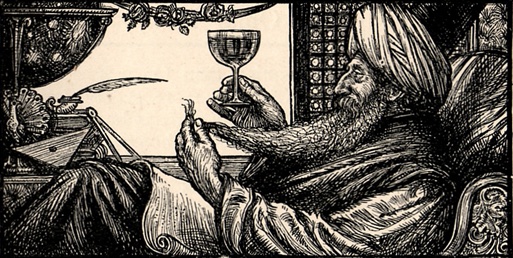
What always consumes Khayyam’s soul is his apprehension concerning death and life after it. He mocks the usual religious responses, that is resurrection and reincarnation, and to release his mind from the insurmountability of death, he takes refuge in wine and love and, forgetting himself in happy-headedness and hedonism. As a result, in spite of criticising resurrection, worship of God, and religious duties, Khayyam is not able to reject the religious point of departure, that is shadowing of death over life, and follows the path toward appreciation of life.
In Khayyam’s hedonism, only the earthly tavern replaces the heavenly tavern and the ceremonies of drinking that of religious worship. Moreover, although Khayyam is saddened by the existence of injustice and ignorance in society, and speaks out against the clergy, yet he preaches seclusion and escape. Therefore, it is not improper to call Khayyamian happiness: the bitter joy, that is, the happy drinking of a lonely person to whom life tastes like death.
Khayyam, in addition to poetry, was interested in mathematics and astrology. Scientific work helps him to think of philosophical problems beyond the usual religious biases. The following quatrain, while showing the impact of astrology in his philosophical thought, reveals to us his main obsession, that is, death:
From the mass of black clay to the heights of Saturn
I solved abstract problems one by one
I untied the knots of problems with skill
All knots were untied except that of death*
Death is a force from which no human being can escape:
No one wins over the wheel of time
And the earth is not full of eating men and women
You are proud that you are not eaten yet
Why hurry, it’s not late, you’ll be eaten too
In spite of the fact that being and not being are unbreakably connected, the problem of death is more important and appealing to Khayyam than the emergence of life. Whether the world is created or timeless, death inevitably knocks at our door:
I’m not immortal in this universe
So it’s a big mistake to be without wine and love
How much longer on «created» or «timeless», oh wiseman
We will be gone, whether the world is created or timeless
People after death turn into dust, therefore, each handful of dust is reminiscent of a person in the past:
The Wheel will not pick up any clay from the earth
Until it is shattered, returning to clay again
If the cloud lifts the soil just as water
It will rain the blood of our loves until the resurrection
Man cannot escape death in reality, but he is not deprived of wishful thinking and three imaginary escape routes smile at him: First, if man can drink from the spring of life ,he will be able to remain evergreen like Khezr(Elias, the prophet of Israel?). Alexander, the double-horned, returned unsuccessfully from this path, and Achilles and Esfandyar who took ablution in holy water, each unintentionally left a vulnerable spot for himself from which death won. Therefore, gods and semi-gods remain immortal and humanity cannot reach it. Second, based on the principle of reincarnation, Hindus believe that people after death, measured by their behavior in this world, will be reborn in a new form and through this process, they are able to overcome death. Third, acording to Islamic and Judeo-Christian traditions, the human soul after death has to wait for the day of reckoning. At that time, all the dead will be raised; those who had done wrong will go to hell, and the righteous to paradise:
What if there was a place for resting in peace
Or there was a destination for this far path
What if after one hundred thousand years, within the earth
Like greenery, there was hope of growing back again
Although Khayyam considers each of three utopian forms of victory over death absurd, he is influenced by the Hindu reincarnation. After death parts of a dead body remain in other existing forms. Thus, there is a material unity between the living and the dead:
Every leaf of grass grown at a brook
Looks like the new fuzz on the upper lip of an angelic face
Behold, do not step on greenery with contempt
Because it has grown out of the tomb of a tulip-faced youth
Khayyam feels deep emotional connections between himself and others as well as among past, present and future. A connection which can create happiness as well as sorrow:
Last night I hit the porcelain jar
I was tipsy, and so I did wrong
The jar was telling me in a mystical language
I was like you, and you,too, will be like me
The material unity of the world is caused by the identity of its component parts:
When humers were composed by the Omniscient
I don’t know why He made them defective
If they came out well, why does He break them into pieces
If these forms were not made well, who should be blamed
In the following quatrain he mentions four material elements of nature:
We are in this ruined corner with wine and our loves
Not bothered by hope of paradise or fear of torment
We have pledged our souls, bodies, cups and clothes for wine
Free from wind, earth, fire and water
Among four elements, for people who live in an environment with vast deserts earth seems more important. It is said in all holy books of monistic religion of the Middle East, including the Koran, that God created man from the special soil used for pottery, and then, blew spirit into it. Khayyam, also, is influenced by this myth. With this difference, the system of creation consists of two departments: one the pottery workshop and the other, the tavern. In the first place, human bodies are made and in the second, divine spirit is poured into the bodies. From the soil of each clay jar which shatters, another clay jar is made, and this process goes on to eternity:
Last night I went to the workshop of a potter
I saw two thousands clay jars, talking and quiet
Suddenly one clay jar wailed loudly:
«Where is the potter and the seller or buyer of pottery?»
But the master of the workshop is no other than the pottter of the universe (dahr):
It is a cup praised by wisdom
Kindly kissing its face one hundred times
The potter of the universe makes such a delicate cup
Then throws it on the ground, time after time
Sometimes, the potter of the universe is changed to the painter of the garden of the universe:
True, I have beautiful hair and visage
A face like a tulip and height like a fir tree
Yet it’s not clear why, in the garden of the universe,
The eternal painter has thus drawn me
In addition, sometimes instead of the word «dahr» time, words such as «charkh» wheel, «gardoon» spin and «falak» firmament are used which remind us of the potter’s wheel as well as heavenly spheres and stars:
Oh Wheel, how come you make a miserly person wealthy
And you give him a bathhouse, mill and a mansion
But a freeman is in debt for his daily bread
No doubt one must fart on such a firmament
The dahrian interpretation of the Creator was not begun with Khayyam. For example, in pre-Islamic Iran Zarvanians, a faction of Zoroastrianism held that position. Dahr suggests the passage of time; it has determined in advance the lot and the time of everything and everybody in the tablet of fortune :
Bewildered like a ball in the polo of fortune
Go left, go right and say nothing
Because one who dropped you in this feverish running
Only he knows, only he knows, only he
Nevertheless, it seems that in some cases Khayyam by using fatalism, intended to justify his religious non-observance. If everybody’s fate is predetermined, he neither benefits from religious worship in this world, nor can he hope for salvation on the day of judgment:
Because God ordained your daily bread
Neither will he diminish it nor increase it
One should feel free regarding what there is
And be carefree about what there is not
And also in this quatrain :
Oh Lord, you have moulded my clay, what should I do?
You have strung my jasper and pearl, what should I do?
Whatever I do, either evil or good
You have written for me in advance, what should I do?
Contrary to the fatalism and irresponsibility thus caused in the above-mentioned pieces, we encounter a completely new thought in the following quatrain:
Every good or evil inherent in human nature
Every joy or sorrow within the predetermined fate
Should not be left to the Wheel, because viewed by wisdom
The Wheel is more miserable than you a thousand times
If from the above-mentioned poem, one can understand the necessity of human freedom only by negative reasoning, in the following quatrain the argument will be self-evident:
We are the end of all creation
In view of wisdom, spirit or vision
The circle of the world looks like a ring
And we are the only design on its stone
Therefore, man is the center of the universe. He is autonomous in his deeds and God has no influence on him. Khayyam both in the forms of fatalism and voluntarism attempts to loose the principle of resurrection He does not accept the words of the Koran and the Prophet about the day of judgment and wants to think with his own head. In order to reject resurrection, he uses four arguments:
Firstly, Khayyam according to the classical, is a Naturalist philosopher, or as the contemporaneous say adheres to the scientific method. In his investigation, he instead of reaching the conclusion at the outset and then finding examples in reality, begins with the observation of the world around him, and like Francis Bacon, after observing nature, contemplates, analyzes and finally reaches a conclusion. In the following quatrain, he after observing the growth and death of a tulip, concludes that human resurrection has no basis:
Drink wine, you will sleep a long time in the earth
Without companion, comrade, friend or mate
Behold, do not reveal this hidden secret:
That tulip which withered, will not blossom
Secondly, Khayyam does not limit himself to observation, but is ready to accept the correct ideas of others. Unfortunately, so far no dead had returned from the grave, upon which his words can be based:
From all those gone on this long path
Who has returned to reveal to us the secret?
Behold, at this dilemma of greed and need
Do not leave anything, because you won’t come back
Thirdly, After observation and fact, it is time for analytical reasoning. Provided everything is written in the tablet of fortune in advance, then, the duties of worship in this world and resurrection hereafter are both senseless:
How much longer light from the mosque and smoke from the synagogue
How much more «loss» in hell and «profit» in paradise
Look at the tablet of fortune, where from primordial time
The master wrote whatever was ordained to happen
And fourthly, if through observation of nature, investigation of facts and philosophical contemplation we cannot find a basis for resurrection, what would be the need for its invention? Neither are people in nature lovers of vanity, nor is the blade of absurdity always sharp. As a result, belief in the day of reckoning originates from social and psychological needs. In a world filled with sorrows, where oppression and ignorance rule, the suffering and hopeless, have to take refuge in utopia and find a way out in dreams. Therefore, we find concepts such as paradise, inferno and even God:
The Wheel is a belt around our worn-out body
The river of Oxus is a mark of our refined tears
Hell is a spark from our unheeded sighs
And paradise is a moment of our peaceful time
Not only belief in the day of resurrection is a reflection of our joy and sorrow in this world, but also even the concept of God is caused by the feeling of the passage of time on the world and our bodies. Khayyam, in some other quatrains shows a tendency towards complete atheism:
This sea of being has appeared from hiding
There is no one who can pierce the jewel of its knowledge
Everybody has said words in caprice
What is on the other side, No one can say
In spite of all fact and reasoning even if there will be a day of resurrection with its paradise and hell, it would be better for us not to lose the cash for a credit. Khayyam leaves the promised paradise to the faithful and inspires others to build a paradise in this world:
They say paradise will be fun for you with its beautiful women Instead, I’d say that the juice of grapes is good for you
Take this cash and wash your hand of that credit
The sound of a kettledrum is only fun from afar
If what the Koran says about the beautiful women and men is true, so enjoying wine and love in this world should not be considered an abomination:
They say that there will be a paradise with beautiful women
There you will have pure wine and honey
If we worshipped wine and love it would be right
Because the outcome of our world will be the same
The inferno cannot be a place for lovers and drunks:
They say that the drunken people will go to hell
This is incorrect and one should not have faith in it
If lovers and drunks will inhabit inferno
You will find paradise tomorrow like the palm of a hand
Even different arguments within those who believe in resurrection gives Khayyam an opportunity to preach his gospel of joy:
They say whoever fears God
Will be raised as when he died
That’s why we always enjoy wine and love
So that in resurrection we will be so raised
Because we might be raised in our present bodily form, Khayyam gives the address of his grave in advance, so that the functionaries of the day of judgment will not make a mistake:
When I pass away, use wine for my ablution
Instead of holy words, fill my mouth with pure wine
If you want to find me on the day of resurrection
Seek me at the threshold of the tavern
Sunni Moslems were not the only enemy of Khayyam. In addition to Sunni governments of Malekshah and Sanjar belonging to the House of Saljooq, there were Isma’ili partisans, (or Sevener Shiis). They made a distinction between the literal and the hidden meaning of words of the Koran, and instead of relying on words and deeds attributed to Mohammad, the prophet,as Sunnis did, they advocated a rational interpretation of religion. The beautiful legend of three schoolmates: Khawjeh Nezam Oa-Molk (the powerful vizir of Saljooq’s kingdom), Hasan Sabbah (the leader of the Isma’ili partisans in Iran) and Omar Khayyam, thoroughly illustrates the battle of three ways of thought: reactionary orthodox Suniism, revolutionary rationalist Isma’ilism and agnostic hedonism of Khayyam in the eleventh and twelfth centuries. Khayyam was suspicious of both trends because they misled people with the mirage of the day of resurrection, and he looked for his paradise in this world:
I will kill sorrow with a huge jug of wine
And enrich myself with two large goblets of it
First I will divorce reason and religion forever
Then I will marry the daughter of grapevines
In the following quatrain, he mocks Isma’ili concepts, such as knowledge, the literal (appearance) and hidden (inside) meanings of the Koranic verses:
I know the surface of being and not being
I know the depth of each up and down
Yet, I should be ashamed of my knowledge
If I know a place above drinking
The Isma’ili movement had created a new fever among people, but Khayyam knew that they work in vain, as a Persian saying suggests: they were milking a bull:
They who work hard for reason
Are milking a bull in vain
It would be better for them to wear a fool’s costume
Because today no one swaps cabbage for reason
They consider themselves a knowledgable elite, however in reality they are a handful of ignorant donkeys:
With these few ignorant who foolishly
Consider themselves the intelligent of the world
Be a donkey, because they are so deep in donkeyness
Who name blasphemous whomever is not a donkey
Khayyam mocked the Isma’ili’s «reason», not because he did not believe in rational reasoning. He was himself a mathematician and astrologer, and in order to reject revelation and prophet’s tradition, he relied on observation and reasoning. Reason (‹aql) in Isma’ili’s hands was only a banner by which they tried to cover their religious dogmas. Therefore, the object of Khayyam’s criticism was their dogmatism and not reason in and of itself. Two factions of Sunni and Isma’ili, although different in their slogans, methods, leaders and epics, both preached religious dogmatism:
A group of people contemplates for the sake of religion
Another group presumes they have found truth
I am afraid that it will be announced one day:
Oh you misinformed, the path is neither that nor this
Mysticism also opposed reason, just to replace it with intuition or personal revelation. Khayyam’s criticism, on the contrary, aimed at Isma’ili dogmatism in disguise as rationalism. Nevertheless, one cannot consider Khayyam a «rationalist», neither in terms of ancient Greek philosophy nor modern European thought. In the following piece, he absolves himself of being a Greekophile:
The enemy said wrongly that I am «philosophical»
God knows what he said I’m not
Since I have come to this vale of sorrow
Am I less than that knowing who I am?
He does not despise knowledge and contemplation, but finds no certainty in their results:
My heart has never been deprived of knowledge
And there are few secrets which are not revealed to me
I contemplated seventy-two years, days and nights
It became known to me that nothing has been known
He does not want to look humble, rather he presents his philosophical skepticism. Khayyam does not hope that riddles of eternity or the relation between being and not being will ever be disclosed to humanity:
The primordial secrets will not be known either to you or me
This gibberish will not be read either by you or me
We are talking to each other against the curtain
When the curtain is dropped, there remains neither you nor me
Those who think they have the truth in their hands, are in fact mythologizing:
Those who encircled knowledge and letters
And set a candle for apostles to reveal knowledge
At last they did not find a way out of this dark night
Only told stories and then went to sleep
Khayyam turns his philosophical doubt into a weapon in order to reach his philosophy of joy:
Since truth and certainty are not at hand
One cannot sit hypothesizing for one’s whole life
It would be better for us not to set down cups of wine
Drink and become tipsy, neither drunk nor sober
As a result, by leaving the religious responses, Khayyam finds the doors of human victory over death closed. What remains is a borrowed life which should be considered as a loan and repaid. One should enjoy the moment. Neither have a desire for the future, nor envy yesterday:
Today, you cannot reach tomorrow
And thinking of tomorrow is but a fantasy
Don’t waste this moment, if you are not senseless
Since the rest of your life will not last forever
And also in the following, in which Khayyam puns on one hand «new day» with «New Day», that is the Persian celebration for the beginning of Spring, and on the other hand «yesterday» and «January», that is the beginning of Winter:
How good is New Day’s dew on the face of a flower
How good is a charming visage on the expanse of a lawn
When January passes, whatever comes is not good
Be happy and forget yesterday, only today is good
Immersing himself in hedonism for Khayyam is not merely escaping death. Moreover, in this world there is no justice. A miserly person is wealthy and a freeman needy. So, in order to forget oppression and ignorance, he takes refuge in wine:
Oh time, you confess to your injustice
And you hide behind the walls of oppression
You bless the trash and torment the good
It’s one of these: you’re a fool or a donkey
The god of Khayyam is not just:
If the universe runs on justice
Conditions of the world were all sound
If the wheel spins justly
When would the men of knowledge be troubled?
Nevertheless, he knows that he should not be ungrateful. So, he writes sarcastically:
The one who gave to jujubes smiling lips
Gave also a bleeding liver to those in pain
If he didn’t give us joy, we shouldn’t be sad
We are happy because he’s given us so much sorrow
He wishes he could eliminate the unjust Wheel, and replace sorrow with happiness:
If I had access to the Tablet of Fortune
I would write it just as I wish
I would eliminate sorrow from the world
And joyfully, raise my head high as the Wheel
The main motif of Khayyamian hedonism is drinking. One can only wash off the sorrow of the world through wine:
Through the coming of Spring and going of Winter
The pages of our book are slowly passing
Have wine, don’t have sorrow, the philosopher said:
Sorrows of the world are like poison, its antidote wine
For happy drinking, one must be alive. A dead person cannot feeljoy. Life is an investment whose interest is joy. To acquire interest one should save the principle:
If there is only one breath left in your life
Do not let it pass unless joyfully
Behold, the capital of the kingdom in this world
Is life, it will be spent the way you spend it
Prohibition of wine by religion especially in the holy month of fasting, only adds to the diabolic desire of Khayyam to drink:
They say do not drink wine in Sha’ban, it is not lawful
Not also in Rajab, which is God’s special month
Sha’ban and Rajab are the months of God and his prophet
We will drink in Ramazan which belongs to us
If blowing of God’s spirit into the human body resembles the pouring of wine into a cup, then, it might follow if God drinks, that He might break Khayyam’s cup:
You broke my jug of wine, my Lord
You shut the door of the feast on me, my Lord
You spilled my red rosy wine on the ground
Forgive me! Are you drunk? My Lord
Lucifer also has to follow God and drink, so that he can overcome his arrogance and prostrate himself to Adam:
Wine reduces arrogance from heads
And it unties the strong knots
If Lucifer had wine for a moment
He would bow to Adam two thousand times
Drinking has its own rituals and one should drink in moderation:
If you drink wine, have it with wisemen
Or drink it with a laughing, tulip-faced boy
Don’t drink too much, don’t brag or tell secrets
Drink a little, on occasions and surreptitiously
Sometimes his drunkenness becomes so moderate that it changes to a mood between drunkenness and sobriety:
As long as I am sober, joy is unrevealed to me
When I become drunk, my reason diminishes
There is a mood between sobriety and drunkenness
I am its slave, all of life is that moment
Sometimes moderation in drinking ends in repentance:
Alas, my whole life passed in vain
I am both an unlawful eater and an unclean breather
Disobedience to the ordained, made me a sinner
Woe unto me, because of my unlawful deeds
Perhaps, the above-mentioned cheap and phony quatrain has been added to Khayyam’s Divan by the religious censors. Perhaps the poet himself has done this in order to remove his footprints. But no one knows for sure. It is possible that Khayyam, like many others, had different phases in his intellectual life or sometimes vacillated between different tendencies:
We have on one hand the Book, and on the other the cup
We are sometimes unlawful men and sometimes men of faith
We are under this raw turquoise-colored dome
Not absolutely blasphemous not thoroughly Moslem
The propagandists of the cruel God on earth are the clergy who hypocritically fool the people. But they keep the promised paradise for themselves here:
One sip of wine is better than the kingdom of Kavous
And it is better than the throne of Qobad and the seat of Toos
Each sigh that a lover takes in the early morning
Is better than the whining of the hypocritical faithful
The clergy is not only hypocritical but also blood-thirsty:
Oh holder of holy decrees, are we more blood-thirsty than you
In spite of all this drunkenness, we are more sober than you
We drink the blood of vines and you the blood of people
Be fair, which of us is more blood-thirsty?
Khayyam does not even want to hide his belief, putting the clay jug of wine on his head in public:
Those who place the basis of asceticism on deceit
In fact separate the soul and the body
From now on I will put the jug of wine on my head
Even if they slash my neck like a rooster
And finally he proclaims war against the religious leaders:
Do not spill the tears of a new bride of vine
Or shed blood except of the uncleansed worshipper’s heart
Shed the blood of two thousand rotten hypocrites
But do not pour your sip of wine on the ground
Suppression ravages Khayyam’s society:
One has to be sober in the world of the living
One has to keep quiet in re affairs of the world
In order to save one’s eyes, tongue and ears
One has to be without eyes, tongue and ears
Social suppression not only obliged him to silence, but also made him preach seclusion:
It would be better for you to seek fewer friends now
Friendship with people at present is best at a distance
The person you rely on in your life as a friend
When you open the eye of your wisdom, is your enemy
The feeling of social inability in Khayyam stems from his philosophical determinism and, in turn, influences it. That human individual who in a couple of Khayyam’s quatrains is called the end of the whole creation, now in the following poem is equated with a fly:
It was a drop of water, joined the sea
It was a speck of dust, returned to the earth
What is the reason for your coming and going in this world?
A fly appeared and then vanished
One cannot find a phrase more burning than this nor a wine more bitter. He finds no difference between being and not being or sorrow and joy. What he has, indeed, is a death-like being or a bitter joy:
Since to whatever is, there is not but wind at hand
Since to whatever is there is but flaw and defeat
Imagine that whatever is in the world does not exist
Or whatever is not in the world does exist
In spite of denial of resurrection and reincarnation, Khayyam is not able to leave the religious point of departure, that is the dominance of death over life. Religion considers this world as a farm which will be harvested hereafter, that is in the world after death. Of course, the ratio of death-worship differs from religion to religion,. For example, one should compare the cult of martyrdom in Islamic Shiism with the peaceful society of Quakers in the U S. Nevertheless, in all religions, the other world is the basis for our behavior in this world. All religious duties, such as prayer, fasting, charity, pilgrimage and holy war, as well as all of the social networks and temples of religion are aimed at the other world, and only find meaning there. A religious man plans his life in terms of the life hereafter and permanently carries its anxiety. Khayyam also, like the faithful, considers this world a farm for the other world. With this difference, they irrigate their farms with a liquid mixed with the soil of their martyrs’tombs, whereas Khayyam with the bitter wine of forgetfulness.
Anxiety about death is so dominant on the soul and mind of Khayyam, that he spends his whole life trying to forget this nightmare. Of course, sorrow for those who have gone, and anxiety about one’s own death, are painful feelings. But if we accept that death is part of life, sorrow for it will disappear in the cracks of the joys of life. That day will come inevitably. But, as long as one is alive, why one should live with this nightmare? Love toward other people, mixing with nature, passion for knowledge, and endless energy for creation– these are the desirable motivations for living, and not a sickly effort to forget death. In fact, the religious wine of eternity and the bitter wine of Khayyam both follow the same goal, which is escaping life to forget death. Therefore, both are death-oriented.
A religious man and Khayyam are both permanently living in a nightmare, the former caused by the existence of the world after death, and the latter because of its absence. One spends his life doing the absurd and death-creating religious duties, and the other in drinking and destroying body and soul. Both see man as a tool in the hands of a metaphysical force beyond being and humanity. One kneels toward this superbeing seeking its blessings, and the other turns his back and insults it, but both are captured in its labyrinth.
As a result, if determinism is the philosophical root of death-worship, any other kind of thought which conceives man as a dead pawn in the hand of a super being, may tend toward death-worship even if one would call that force «epoch-making» and «life-provoking». A contemporaneous example is the school of evolutionism, which perceives life as a battleground, and man as the foot soldier, of the forces of evolution. From the point of view of this school, an invisible force dominates nature and society, which evolves, slowly but regularly, from simple to complex and from lower to higher. In spite of their disruptive behavior, the forces hindering evolution in nature and society, sooner or later will disappear and the army of evolution will triumphantly continue to march.
Therefore, the end of being, including that of man is only helping this evolutionary finalism. The more one puts oneself under the control of this mystical force, the more one deserves respect and appreciation.
Evolutionism in accordance with capitalism is widespread, and under its influence considers the economic rate of growth as the only standard for measuring the level of evolution. Nature and society both resemble a capitalist market. In capitalism, the more the rate of profit and productivity of labor-power and production increases in an enterprise, the more the possibility of victory over its competitors. Based on this economic model, that society is considered higher on the ladder of evolution, where economy and productive forces are more progressive. Also in nature, that animal or plant is more evolutionary where due to the complexity of its organism, it can create more productive energy.
Thus, it is not accidental that an economic oriented society such as capitalism considers the same mission for itself as the early Moslems felt in Arabia, or Isma’ilis in Khayyam’s time. In these societies, man sees himself captured by forces which are not under his control. In one, religious verses, and in the other, scientific laws grant the necessary pride to the carriers of the mission, and assuage their conscience for destroying their enemies. The mission must be carried on. The righteous religion has to prevail, and the machine of progress and evolution ought to open triumphantly the gates of «barbarism».
It is interesting when the mission of determinists is carried on, signs of despair and disillusion gradually appear in the mission-stricken society, and it becomes clear that the mystical mission has been but a mirrage, and has accomplished nothing but mutilation of life. Khayyam lived in such an epoch, when both Sunni and Isma’ili society were suffering from a hang-over, which appeared after their holy drinking. In the second half of the nineteenth century, the bourgeois society of England, too, was gradually showing the disappointing symptoms caused by its mission of industrial progress. At this time, the translation of Omar Khayyam’s quatrains by Edward Fitzgerald (1809-1883) spread the name of Kayyam in the West.
The above-mentioned epochs are the time of defying dogmas, disillusionment and falling of idols, as well as a period of defeat, despair and isolation. The bitter joy of Kayyam contains both of these characteristics. On one hand, he mocks missions, messengers and mission-stricken people, and on the other hand, he extends his mockery to humanity as a whole, and foresees human fate as only defeat and destruction.
Today, our Iranian society faces a period of defeat and disillusionment, and as of now, one can taste the bitterness of Khayyamian joy in one’s mouth. Who will be the next Sadeq Hedayat?*
*- I have translated Khayyam’s quatrains from Persian into English from this version: Robae’yat-e Omar Khayyam, Volume II, 1955, Moscow .*- This text was first published in the magazine of Akhtar, No. 7, 1989, Paris.
*- Sadeq Hedayat (1902-51)The most prominant Iranian novelist. Among other things, he edited a version of Omar Khayyam’s quatrains in Persian, and committed suicide in Paris.
*- In recent years, at least three Iranian poets and novelists have killed themselves: Nooshin Amani (1994 Los Angeles), Ghazaleh Alizadeh (1996 Iran(and Islam Kazemieh )1997 Paris(.
https://iroon.com/irtn/blog/19307/khayyam-and-his-bitter-joy/